.png)


Helping parents of young people with Type 1 diabetes rediscover themselves beyond the role of carer.
WHO I HELP
You might recognise yourself here...
You're the one who remembers the appointments, the medication and everything that everyone else forgets.
You're constantly thinking three steps ahead.
You struggle to switch off, even when someone else is helping.
You carry the invisible mental load that nobody else seems to notice.
You feel guilty when you take time for yourself.
People ask how the person you're caring for is.
Very few people ask how you are.
Somewhere along the way, your identity became wrapped up in being the person everyone relies on.
And you're starting to wonder...
What happened to me?
If you're ready to rediscover the person behind the caring role, you're in the right place.
MY STORY
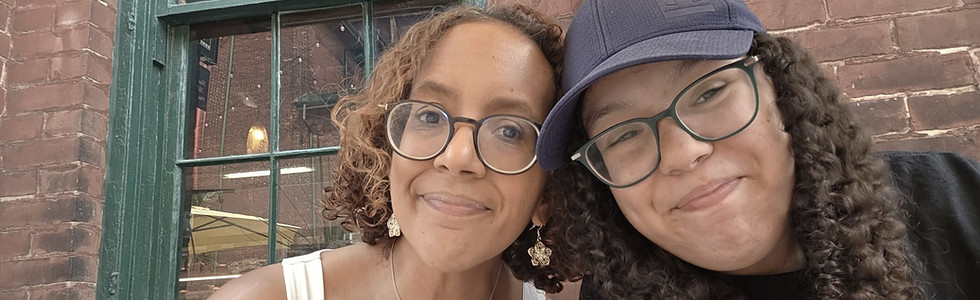
When my daughter was diagnosed with Type 1 diabetes during the height of the COVID-19 pandemic, our world changed overnight.
Because of the restrictions at the time, I was the only person allowed to stay with her in hospital and the only person given the detailed training we needed to manage her condition at home.
Suddenly, the responsibility for understanding what was happening, making decisions and keeping her safe sat almost entirely with me.
And being the parent of a pre-teen brought its own challenges. Caring for your child isn't just about appointments, medication and practical tasks. As they grow, there are also changes around independence, privacy and the relationship between parent and child.
Over the following months and years, we worked through the constant learning curve that comes with a long-term health condition. Different treatments, different technology and the ongoing responsibility of being the person who knew the details and carried the knowledge.
All while I was working full time and grieving the additional loss of close family members.
Eventually, the weight of trying to hold everything together caught up with me.
A change in treatment a year after diagnosis pushed me to a point where I realised I couldn't keep putting myself at the bottom of the list.
Not because I cared any less.
Because I cared so much.
I was lucky enough to work with a counsellor who worked with young people with Type 1 Diabetes. She had Type 1 diabetes to - which meant that when I needed support from her, I could park all the technicalities of Type 1 life and just talk about the things that needed focus. No need to explain what carb-counting, sugar pixels, CGMs or Hba1C was. Or why I'd had a sleepless night of finger pricking and jelly babies.
Having space to talk without all that additional narrative helped me recognise that looking after myself wasn't taking anything away from my daughter. It was what allowed me to keep showing up for her.
That experience changed the way I think about caring.
I know how easy it is to become so focused on the person who needs you that you lose sight of yourself.
Now, through coaching, I help parents and carers reconnect with who they are beyond the caring role — without feeling that prioritising themselves means they are letting someone else down.
WHY COACHING?
When you're caring for a young person with Type 1 diabetes, it can be very easy for your own needs to disappear somewhere underneath the appointments, alarms, school issues, paperwork, planning and constant mental load.
Coaching gives you something that can be surprisingly difficult to find:
Dedicated time to focus on you.
Not your child's diabetes.
Not what needs organising next.
Not what the school needs from you.
You.
Coaching isn't about giving you another list of things to do. It's about helping you step back from everything you're carrying, work out what you actually want and find small, realistic ways to make life feel a little more like yours again.
WHAT COACHING IS AND ISN'T
Coaching isn't therapy or counselling, and it isn't medical advice or diabetes support.
I won't tell you how to manage your young person's Type 1 diabetes, and I'm not here to diagnose, treat or fix you.
Instead, coaching gives you space to explore what's going on for you, consider different perspectives and work out what you want to do next.
We'll look at what's within your control, what isn't, and where a small change could make a meaningful difference.
There's no expectation that you can simply "do more self-care" or magically find another hour in the day.
Sometimes the answer is recognising that something genuinely can't change right now — and finding another part of your life where you can make a change that gives you some capacity back.
WHY WORK WITH ME
Because you shouldn't have to spend half your coaching session explaining what it's like to parent a young person with Type 1 diabetes.
-
I know that the overnight alarms aren't something you can simply solve by "getting more sleep".
-
I know that a school trip can involve far more than putting a bag by the front door.
-
I know that the constant possibility of a phone call can mean you're never quite as switched off as you look.
-
I know that caring for a young person with Type 1 can become so all-consuming that you can start to feel as though being their carer is your entire identity.
You can park the Type 1 diabetes complexity at the door. I understand that bit.
That means we can spend our time looking at you — what you want, what matters to you and what might make your life feel a little easier.
WHAT MIGHT WE WORK ON?
Your coaching will be shaped around you, but you might want to explore things like:
-
Feeling less guilty about making time for yourself
-
Rebuilding confidence in your own needs
-
Working out what you want beyond the caring role
-
Setting boundaries without feeling selfish
-
Finding ways to create more space in your life
-
Reconnecting with things you used to enjoy
-
Exploring what independence means for both you and your young person
-
Preparing for changes as your young person becomes more independent
-
Feeling more like yourself again
This isn't about becoming a different person.
It's about making some space to work out who you are, what you need and what you want next.
A PRACTICAL, POSITIVE APPROACH
My coaching approach is rooted in positive psychology, but you don't need to know anything about positive psychology to benefit from it.
In practice, that means we won't spend our sessions endlessly analysing what's wrong.
We'll acknowledge the difficult stuff — because with Type 1 diabetes, sometimes the difficult stuff is genuinely difficult — and then look at what you can influence.
-
What is already working?
-
What matters to you?
-
What strengths are you already using?
-
What could be different?
-
And what's one small step that could move things in the direction you want to go?
Because you don't need another person telling you how to manage your life.
You probably need some space to work out what you want your life to look like.
WAYS TO WORK WITH ME

DISCOVERY
FIND OUT MORE
A free, no-obligation conversation to see whether coaching is right for you.

INDIVIDUAL
ONE TO ONE COACHING
A structured coaching programme to help you reconnect with yourself beyond the caring role.

GROUP
SMALL GROUP COACHING
Small group coaching for parents and carers who want support from people who truly understand.
RESOURCES
DOWNLOAD THE FREE HOLIDAY SURVIVAL GUIDE
Planning your first holiday abroad with a young person who has Type 1 diabetes? Download my free holiday survival guide for practical tips to help you prepare, travel with confidence and enjoy your holiday without feeling like you have to have everything perfectly under control.

LISTEN TO THE PODCAST
Listen to the episode where I talk about what it's really like to become a carer for your child — and why looking after yourself isn't something you should have to feel guilty about. Sometimes putting your own welfare first is exactly what your family needs you to do.
LISTEN ON SPOTIFY
READ THE BLOG
Practical thoughts, honest stories and useful things I've learned about parenting, caring and finding your way back to yourself when caring for someone else has started to take over.
SIGN UP FOR THE NEWSLETTER
Sign up for occasional support, practical tips, new resources and honest conversations for parents who spend so much time looking after everyone else that they can forget they're a person too.